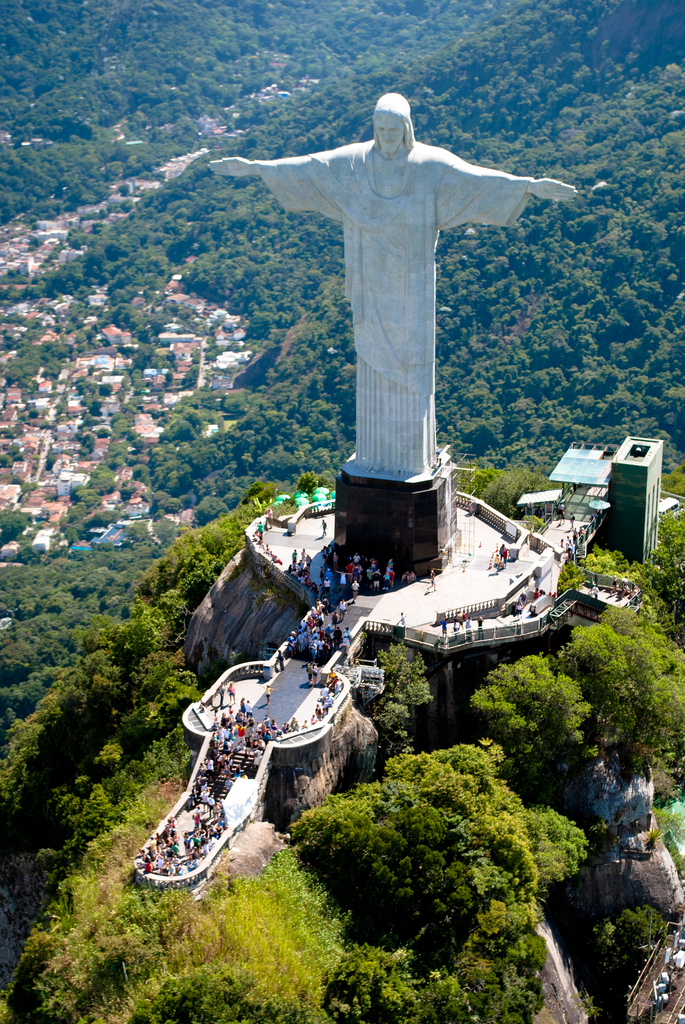
Christ the Redeemer (Cristo Redentor) is one of the most recognizable monuments in the world, towering over the vibrant city of Rio de Janeiro, Brazil. This colossal statue of Jesus Christ stands as an emblem of peace, faith, and Brazilian cultural identity. Perched atop the Corcovado Mountain, overlooking the sprawling city and Atlantic Ocean, Christ the Redeemer is both a religious icon and a marvel of modern engineering.
Historical Background
The idea of erecting a monumental statue of Christ in Rio de Janeiro dates back to the mid-1850s when Catholic priests first proposed a religious monument. However, the project gained momentum only in the early 20th century as a symbol of Brazilian Christianity and national pride.
In 1921, the Catholic Circle of Rio officially launched the project, aiming to create a statue that would represent peace and protect the city. Funds were raised primarily through donations from Brazilian Catholics.
The statue was designed by Brazilian engineer Heitor da Silva Costa, with the French sculptor Paul Landowski creating the statue’s head and hands. Construction began in 1922 and was completed in 1931, taking nearly a decade to build.
Architectural and Engineering Feats
Christ the Redeemer is an imposing statue standing 30 meters (98 feet) tall, with an arm span of 28 meters (92 feet), making it one of the largest Art Deco statues in the world. The statue weighs approximately 635 metric tons.
The statue is made from reinforced concrete and clad with thousands of triangular soapstone tiles, chosen for their durability and ease of maintenance.
The location on Corcovado Mountain, 700 meters (2,300 feet) above sea level, posed significant logistical challenges. Materials had to be transported up steep paths and via a cog railway, requiring meticulous planning and engineering.
The statue’s base is designed to withstand Rio’s frequent lightning strikes, with lightning rods installed to protect the structure.
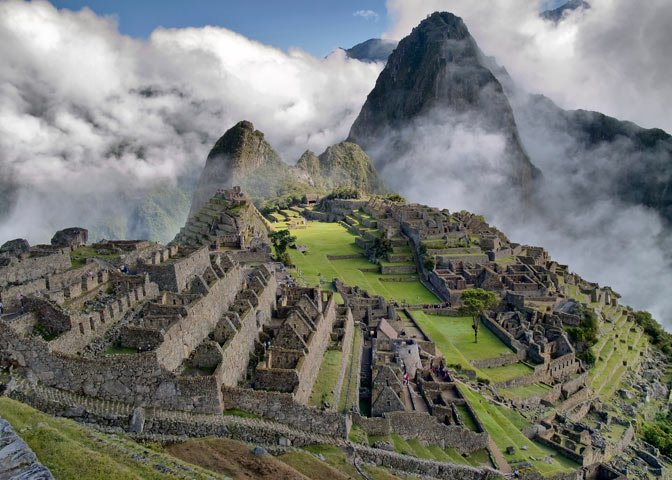
Machu Picchu was built in the mid-15th century during the reign of the Inca emperor Pachacuti, around 1450 CE. Unlike many ancient cities, it was never discovered or destroyed by Spanish conquistadors, allowing it to remain remarkably intact.
The site served as a royal estate and a religious retreat, combining residential areas, agricultural terraces, and ceremonial spaces. It was likely a center for astronomy, spirituality, and governance, reflecting the multidimensional nature of Inca society.
The name “Machu Picchu” means “Old Peak” in Quechua, the language of the Incas, and the city sits on a mountain ridge approximately 2,430 meters (7,970 feet) above sea level.
Architectural and Engineering Marvels
Machu Picchu is renowned for its sophisticated dry-stone construction, known as ashlar masonry, where precisely cut stones fit together without mortar. This technique allowed the structures to withstand earthquakes common to the region.
The city is divided into two major areas:
Urban Sector: Includes temples, plazas, residential buildings, and the famous Intihuatana stone, believed to be an astronomical clock or sundial.
Agricultural Terraces: Ingeniously designed to prevent erosion and optimize farming in the steep mountainous terrain, showcasing advanced agricultural engineering.
The site is aligned with astronomical events such as solstices and equinoxes, emphasizing the Incas’ deep understanding of celestial cycles.
Spiritual and Cultural Significance
Machu Picchu was more than a city—it was a sacred space. The Incas revered mountains as gods (“apus”), and Machu Picchu’s location between two peaks (Machu Picchu and Huayna Picchu) imbued it with spiritual power.
The Temple of the Sun is a highlight, featuring rounded walls and windows aligned with the solstice sunrise, used for religious ceremonies.
The site’s layout reflects Inca cosmology, balancing the natural landscape with human-made structures to create a harmonious environment.
Rediscovery and Modern Importance
Although known to local indigenous people, Machu Picchu was brought to international attention in 1911 by Hiram Bingham, who led an expedition sponsored by Yale University.
Since then, the site has become a symbol of Peru’s rich cultural heritage and an icon of global archaeological significance.
Tourism has helped the local economy but also led to concerns about preservation and environmental impact, prompting efforts to regulate visitor numbers and protect the site.
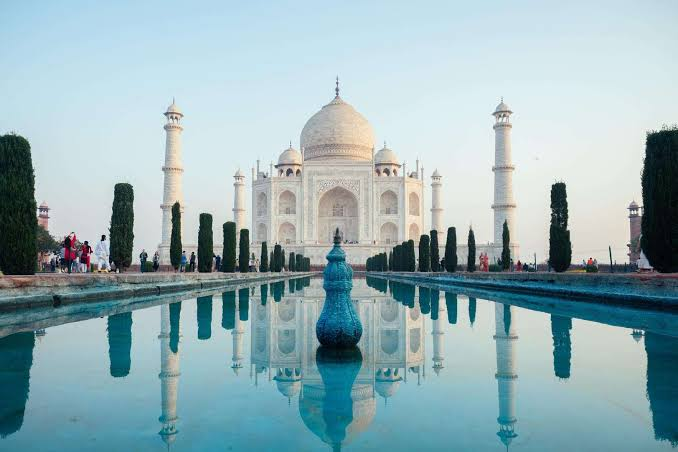
The Taj Mahal, located in Agra, India, is one of the most iconic and breathtaking monuments in the world. Often described as the jewel of Muslim art in India and a masterpiece of Mughal architecture, it attracts millions of visitors annually and is recognized as a UNESCO World Heritage site. More than just a beautiful building, the Taj Mahal is a symbol of eternal love, artistic brilliance, and cultural fusion.
Historical Background The Taj Mahal was commissioned by the Mughal Emperor Shah Jahan in 1632 as a mausoleum for his beloved wife Mumtaz Mahal, who died during childbirth. Devastated by her death, Shah Jahan vowed to build an unparalleled monument in her memory.
Construction began in 1632 and continued for over 20 years, involving thousands of artisans, craftsmen, and laborers from across India, Persia, the Ottoman Empire, and Europe. The chief architect is believed to have been Ustad Ahmad Lahauri, though many contributed to its design and execution.
The Taj Mahal is more than a tomb; it is part of a larger complex that includes a mosque, a guest house, formal gardens, and ornate gateways, all designed to create a harmonious and serene environment.
Architectural Design and Features The Taj Mahal is renowned for its stunning symmetry, intricate detail, and harmonious proportions. It combines elements of Islamic, Persian, Ottoman Turkish, and Indian architectural styles.
Main Mausoleum: The central structure is built from white marble that changes color depending on the light—pinkish in the morning, milky white in the evening, and golden under moonlight. The marble is inlaid with precious and semi-precious stones in intricate floral patterns, a technique called pietra dura. Dome: The massive onion-shaped dome rises about 35 meters (115 feet) high and is surrounded by four smaller domes. The main dome is topped with a gilded finial combining Islamic and Hindu decorative elements. Minarets: Four slender minarets, each about 40 meters (130 feet) tall, frame the mausoleum’s corners. These are designed slightly outward to protect the tomb in case of collapse. Calligraphy: Elegant calligraphy of Quranic verses adorns the entrance portals and walls, executed with black marble and agate. Gardens: The surrounding gardens follow the classic Persian Charbagh layout, symbolizing paradise, with water channels, fountains, and symmetrical flower beds. The entire complex is oriented to align with the cardinal points, reflecting precise astronomical knowledge.
Symbolism and Cultural Significance The Taj Mahal is often called a “monument of love” because it was built as an enduring tribute to the love between Shah Jahan and Mumtaz Mahal. This romantic narrative has made it a symbol of devotion worldwide.
Beyond romance, the Taj Mahal reflects the zenith of Mughal culture, which blended Persian, Islamic, and Indian artistic traditions. It represents the empire’s wealth, power, and cultural sophistication during its golden age.
The mausoleum also serves as a spiritual symbol, with its garden representing paradise and the tomb itself symbolizing the eternal resting place of the soul.
Construction Techniques and Challenges Building the Taj Mahal was a colossal undertaking involving advanced engineering and artistry for its time.
Materials: Marble was sourced from Makrana in Rajasthan, over 300 kilometers away. Precious stones such as jade, crystal, lapis lazuli, amethyst, and turquoise were imported from various parts of Asia and Europe. Craftsmanship: Skilled artisans used calligraphy, carving, inlay work, and lattice screen carving to decorate the monument with unparalleled detail. Water Supply: An innovative system of water channels and wells was developed to supply the gardens and fountains, reflecting sophisticated hydraulic engineering. Despite the grandeur, the construction was not without hardship. Thousands of workers labored under challenging conditions, and legends speak of Shah Jahan’s desire to build a black marble mausoleum opposite the Taj Mahal for himself—though this was never realized.
Later History and Preservation After Shah Jahan’s death, the Taj Mahal remained a royal tomb, but its grandeur attracted both admiration and threats.
During the 18th century, the monument suffered neglect and damage, including looting of precious stones and vandalism during invasions.
In the 19th century, British colonial rulers initiated restoration efforts led by Lord Curzon, recognizing the Taj Mahal’s global cultural significance.
Today, the Taj Mahal faces challenges due to pollution, environmental degradation, and the impacts of mass tourism. Conservation efforts are ongoing to preserve the monument’s delicate marble and intricate artwork.
The origins of the Great Wall date back to the 7th century BCE, during the Warring States period, when various Chinese states built defensive walls to protect themselves from invasions by nomadic tribes from the north. These early walls were made from tamped earth, wood, and stones, and were relatively short segments designed for localized defense.
When Emperor Qin Shi Huang unified China in 221 BCE, he ordered the connection and expansion of these walls to create a more extensive barrier against the Xiongnu, a confederation of nomadic tribes. This marked the beginning of what is often regarded as the first Great Wall, stretching roughly 5,000 kilometers.
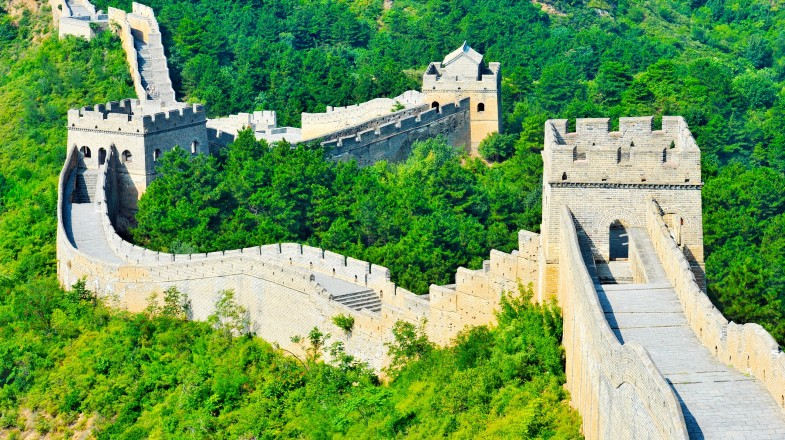
Subsequent dynasties, including the Han (206 BCE–220 CE), Sui (581–618), and most notably the Ming dynasty (1368–1644), contributed to the construction and reinforcement of the wall. The Ming dynasty, in response to persistent threats from the Mongols and other northern tribes, built the most well-preserved and iconic sections of the wall using bricks and stones. These sections include watchtowers, beacon towers, barracks, and troop barracks.
Architecture and Construction
The Great Wall’s construction is a marvel of engineering, adapting to the diverse terrains it traverses—from rugged mountains and steep cliffs to rolling deserts.
Materials: Early walls were made of rammed earth and wood. The Ming dynasty sections employed bricks, stones, lime mortar, and tiles, enabling greater durability.
Design: The wall averages between 6 to 7 meters (20-23 feet) in height and 4 to 5 meters (13-16 feet) in width at the top, wide enough to allow soldiers and horses to march along the battlements.
Watchtowers: Placed at regular intervals, these towers were used for surveillance, signaling, and as living quarters for soldiers.
Beacon Towers: Used to send smoke or fire signals to alert troops of enemy movement.
Fortresses: Larger military bases were built at strategic locations along the wall, enabling organized defense and troop deployment.
The construction process was extraordinarily labor-intensive, involving hundreds of thousands of workers, including soldiers, peasants, and prisoners. Many workers died due to harsh conditions, earning the Great Wall the somber nickname “the longest cemetery on Earth.”
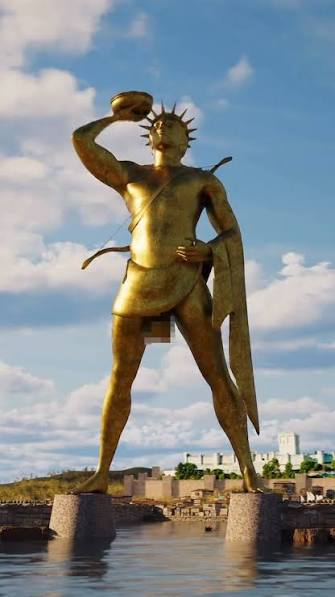
The Colossus of Rhodes was a massive bronze statue of the sun god Helios, built between 292 and 280 BCE to commemorate Rhodes’ victory over Cyprus. It stood approximately 33 meters (108 feet) tall, making it one of the tallest statues of the ancient world.
Positioned at the harbor entrance, the statue was a symbol of Rhodes’ strength and resilience.
Constructed from bronze plates over an iron framework, it was a technical marvel for its time.
The statue stood for only 56 years before being toppled by an earthquake but left a lasting impression as a symbol of freedom and power.
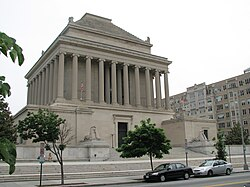
The Mausoleum at Halicarnassus was a grand tomb built for Mausolus, a satrap of the Persian Empire, and his wife Artemisia around 350 BCE. It stood approximately 45 meters (148 feet) tall and was famous for its architectural innovation and sculptural decoration.
Combining Greek, Egyptian, and Lycian architectural styles, the mausoleum featured a rectangular base topped with a stepped pyramid and a chariot statue at the summit.
Renowned sculptors contributed to its ornate reliefs and statues, which depicted scenes of battle and mythology, showcasing the artistic skill of the time.
The mausoleum symbolized Mausolus’s power and the fusion of cultures in his domain.
Though destroyed by earthquakes, its artistic legacy endures, and the word “mausoleum” entered the vocabulary as a term for monumental tombs.
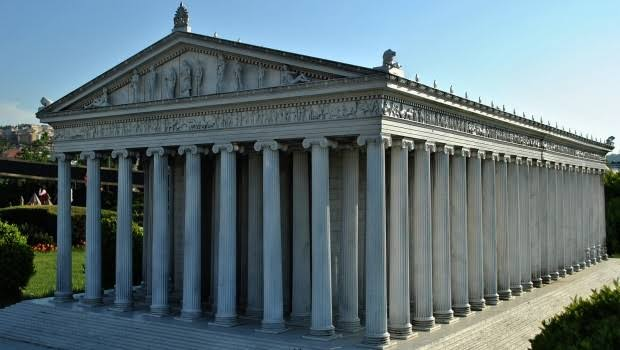
The Temple of Artemis was a large temple dedicated to the goddess Artemis, located in the ancient city of Ephesus (modern-day Turkey). It was constructed around 550 BCE and rebuilt several times due to destruction by flooding and arson.
Known for its grand scale and architectural beauty, the temple featured over 100 marble columns, each about 18 meters (60 feet) high, arranged in a double row around the temple’s perimeter.
The temple was adorned with exquisite sculptures and reliefs, showcasing the artistic excellence of the ancient Greeks and the wealth of Ephesus, which was a major trading and religious center.
It served as a place of worship, pilgrimage, and cultural gathering, attracting visitors from across the ancient world.
The temple’s destruction in the 5th century CE marked the end of one of the most magnificent religious sites of antiquity, but its ruins remain an important archaeological site.
The Temple of Artemis exemplifies the blend of religious devotion, artistic achievement, and civic pride, reflecting the cultural heights of the ancient world.
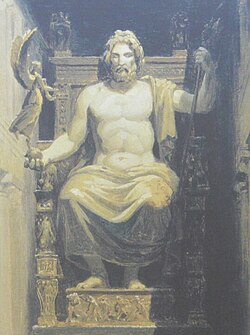
The Statue of Zeus was a monumental sculpture created by the master sculptor Phidias around 435 BCE. Located in the Temple of Zeus at Olympia, Greece, it depicted the king of the Greek gods seated majestically on a throne, measuring approximately 12 meters (39 feet) tall.
Crafted from ivory and gold-plated bronze, the statue was renowned for its grandeur and exquisite detail. Zeus was portrayed holding a statue of Nike, the goddess of victory, in one hand and a scepter topped with an eagle in the other, signifying his supreme power.
Phidias’s work combined artistic skill with religious devotion, aiming to inspire awe and reverence among worshippers. The statue was housed in a temple considered one of the architectural masterpieces of the ancient world.
Visitors to Olympia during the Olympic Games would have marveled at the statue’s size and beauty, which symbolized the might of the gods and the cultural pride of the Greeks.
Unfortunately, the statue was destroyed or lost in antiquity, likely due to fire or earthquakes. Its legacy survives through detailed descriptions by ancient writers and through smaller reproductions and artistic influences.
The Statue of Zeus exemplifies the pinnacle of classical Greek artistry and religious expression, leaving a lasting impact on Western art.
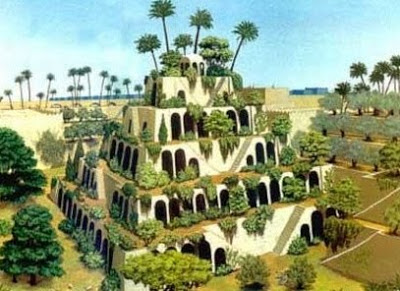
The Hanging Gardens of Babylon are perhaps the most mysterious of the original wonders. Said to have been built around 600 BCE by King Nebuchadnezzar II for his wife Amytis, the gardens were described by ancient historians as an extraordinary series of terraced gardens rising high above the city of Babylon.
According to legend, Amytis longed for the lush green hills of her homeland, and Nebuchadnezzar commissioned the gardens to recreate a natural paradise. They were said to consist of tiered terraces filled with an abundance of trees, shrubs, and flowers, watered by an advanced irrigation system that lifted water from the Euphrates River.
Despite detailed accounts from writers like Strabo and Philo of Byzantium, no definitive archaeological evidence has been found to confirm their existence. Some scholars believe the gardens may have been purely mythical or confused with other ancient gardens, such as those in Nineveh.
If the gardens did exist, their construction would have required innovative engineering, including the use of aqueducts and pumps to raise water to the elevated terraces. This would have been an extraordinary feat in the arid Mesopotamian environment.
The gardens symbolize humanity’s yearning to bring nature into urban life and create spaces of beauty and peace amidst the harshness of the environment. Whether fact or fiction, the Hanging Gardens have inspired countless artists, writers, and architects.
Through the centuries, the idea of “hanging gardens” has become synonymous with the blending of nature and architecture, influencing garden design worldwide.
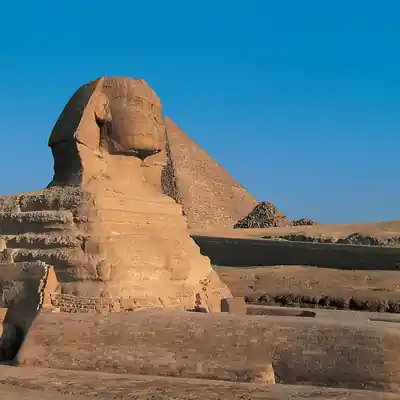
The Great Pyramid of Giza, located on the outskirts of modern Cairo, is the only surviving wonder of the original Seven Wonders of the Ancient World. Constructed over a 20-year period during the reign of Pharaoh Khufu (around 2580–2560 BCE), it was designed as a tomb to honor and house the pharaoh’s body for eternity. The pyramid originally stood at 146.6 meters (481 feet), making it the tallest man-made structure on Earth for nearly four millennia.
The pyramid is composed of approximately 2.3 million blocks of limestone and granite, some weighing up to 80 tons. The precision with which these blocks were cut and assembled remains astonishing, especially considering the lack of modern tools. Its four sides align almost perfectly with the four cardinal points of the compass (north, south, east, west), demonstrating advanced knowledge of astronomy and geometry.
Inside, the pyramid features a series of chambers and passageways, including the King’s Chamber, the Queen’s Chamber, and the Grand Gallery. The King’s Chamber houses a sarcophagus believed to have contained Khufu’s body. The pyramid’s internal design suggests a complex understanding of architecture and ventilation.
The Great Pyramid was part of a larger complex that included two mortuary temples, smaller pyramids for queens, and a causeway connecting the pyramid to the Nile’s edge. This complex was a focal point for religious ceremonies intended to aid Khufu’s journey to the afterlife.
The construction methods are still debated; theories range from large ramps to intricate pulley systems, but no definitive explanation has been confirmed. The sheer scale and sophistication make the Great Pyramid a symbol of human ingenuity and the ancient Egyptians’ religious devotion.
Beyond its architecture, the pyramid represents the power and divine status of the pharaoh, believed to be a god on Earth. It also reflects the centralized control and skilled labor organization of ancient Egyptian society.
The Great Pyramid continues to attract scholars, tourists, and mystics, inspiring awe with its grandeur and mysteries. It remains a testament to what humanity can achieve and serves as a cultural icon representing ancient Egypt.