
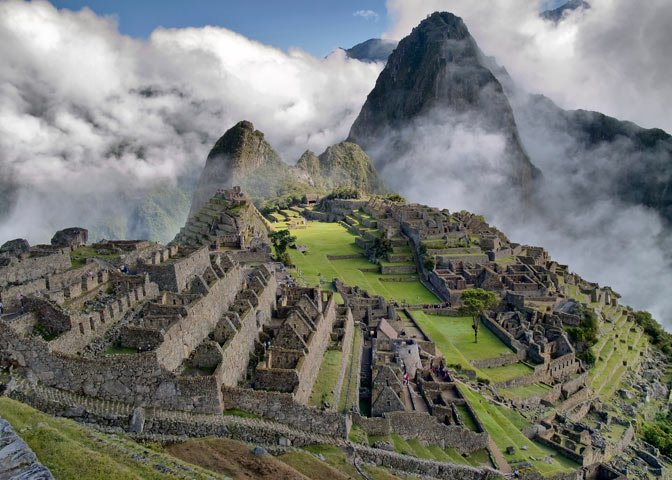
Machu Picchu was built in the mid-15th century during the reign of the Inca emperor Pachacuti, around 1450 CE. Unlike many ancient cities, it was never discovered or destroyed by Spanish conquistadors, allowing it to remain remarkably intact.
The site served as a royal estate and a religious retreat, combining residential areas, agricultural terraces, and ceremonial spaces. It was likely a center for astronomy, spirituality, and governance, reflecting the multidimensional nature of Inca society.
The name “Machu Picchu” means “Old Peak” in Quechua, the language of the Incas, and the city sits on a mountain ridge approximately 2,430 meters (7,970 feet) above sea level.
Architectural and Engineering Marvels
Machu Picchu is renowned for its sophisticated dry-stone construction, known as ashlar masonry, where precisely cut stones fit together without mortar. This technique allowed the structures to withstand earthquakes common to the region.
The city is divided into two major areas:
- Urban Sector: Includes temples, plazas, residential buildings, and the famous Intihuatana stone, believed to be an astronomical clock or sundial.
- Agricultural Terraces: Ingeniously designed to prevent erosion and optimize farming in the steep mountainous terrain, showcasing advanced agricultural engineering.
The site is aligned with astronomical events such as solstices and equinoxes, emphasizing the Incas’ deep understanding of celestial cycles.
Spiritual and Cultural Significance
Machu Picchu was more than a city—it was a sacred space. The Incas revered mountains as gods (“apus”), and Machu Picchu’s location between two peaks (Machu Picchu and Huayna Picchu) imbued it with spiritual power.
The Temple of the Sun is a highlight, featuring rounded walls and windows aligned with the solstice sunrise, used for religious ceremonies.
The site’s layout reflects Inca cosmology, balancing the natural landscape with human-made structures to create a harmonious environment.
Rediscovery and Modern Importance
Although known to local indigenous people, Machu Picchu was brought to international attention in 1911 by Hiram Bingham, who led an expedition sponsored by Yale University.
Since then, the site has become a symbol of Peru’s rich cultural heritage and an icon of global archaeological significance.
Tourism has helped the local economy but also led to concerns about preservation and environmental impact, prompting efforts to regulate visitor numbers and protect the site.