
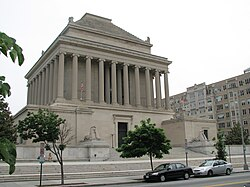
The Mausoleum at Halicarnassus was a grand tomb built for Mausolus, a satrap of the Persian Empire, and his wife Artemisia around 350 BCE. It stood approximately 45 meters (148 feet) tall and was famous for its architectural innovation and sculptural decoration.
Combining Greek, Egyptian, and Lycian architectural styles, the mausoleum featured a rectangular base topped with a stepped pyramid and a chariot statue at the summit.
Renowned sculptors contributed to its ornate reliefs and statues, which depicted scenes of battle and mythology, showcasing the artistic skill of the time.
The mausoleum symbolized Mausolus’s power and the fusion of cultures in his domain.
Though destroyed by earthquakes, its artistic legacy endures, and the word “mausoleum” entered the vocabulary as a term for monumental tombs.