
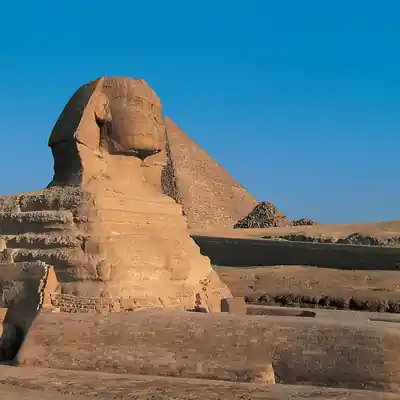
The Great Pyramid of Giza, located on the outskirts of modern Cairo, is the only surviving wonder of the original Seven Wonders of the Ancient World. Constructed over a 20-year period during the reign of Pharaoh Khufu (around 2580–2560 BCE), it was designed as a tomb to honor and house the pharaoh’s body for eternity. The pyramid originally stood at 146.6 meters (481 feet), making it the tallest man-made structure on Earth for nearly four millennia.
The pyramid is composed of approximately 2.3 million blocks of limestone and granite, some weighing up to 80 tons. The precision with which these blocks were cut and assembled remains astonishing, especially considering the lack of modern tools. Its four sides align almost perfectly with the four cardinal points of the compass (north, south, east, west), demonstrating advanced knowledge of astronomy and geometry.
Inside, the pyramid features a series of chambers and passageways, including the King’s Chamber, the Queen’s Chamber, and the Grand Gallery. The King’s Chamber houses a sarcophagus believed to have contained Khufu’s body. The pyramid’s internal design suggests a complex understanding of architecture and ventilation.
The Great Pyramid was part of a larger complex that included two mortuary temples, smaller pyramids for queens, and a causeway connecting the pyramid to the Nile’s edge. This complex was a focal point for religious ceremonies intended to aid Khufu’s journey to the afterlife.
The construction methods are still debated; theories range from large ramps to intricate pulley systems, but no definitive explanation has been confirmed. The sheer scale and sophistication make the Great Pyramid a symbol of human ingenuity and the ancient Egyptians’ religious devotion.
Beyond its architecture, the pyramid represents the power and divine status of the pharaoh, believed to be a god on Earth. It also reflects the centralized control and skilled labor organization of ancient Egyptian society.
The Great Pyramid continues to attract scholars, tourists, and mystics, inspiring awe with its grandeur and mysteries. It remains a testament to what humanity can achieve and serves as a cultural icon representing ancient Egypt.