
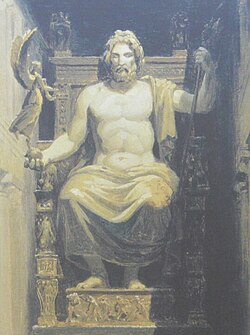
The Statue of Zeus was a monumental sculpture created by the master sculptor Phidias around 435 BCE. Located in the Temple of Zeus at Olympia, Greece, it depicted the king of the Greek gods seated majestically on a throne, measuring approximately 12 meters (39 feet) tall.
Crafted from ivory and gold-plated bronze, the statue was renowned for its grandeur and exquisite detail. Zeus was portrayed holding a statue of Nike, the goddess of victory, in one hand and a scepter topped with an eagle in the other, signifying his supreme power.
Phidias’s work combined artistic skill with religious devotion, aiming to inspire awe and reverence among worshippers. The statue was housed in a temple considered one of the architectural masterpieces of the ancient world.
Visitors to Olympia during the Olympic Games would have marveled at the statue’s size and beauty, which symbolized the might of the gods and the cultural pride of the Greeks.
Unfortunately, the statue was destroyed or lost in antiquity, likely due to fire or earthquakes. Its legacy survives through detailed descriptions by ancient writers and through smaller reproductions and artistic influences.
The Statue of Zeus exemplifies the pinnacle of classical Greek artistry and religious expression, leaving a lasting impact on Western art.