
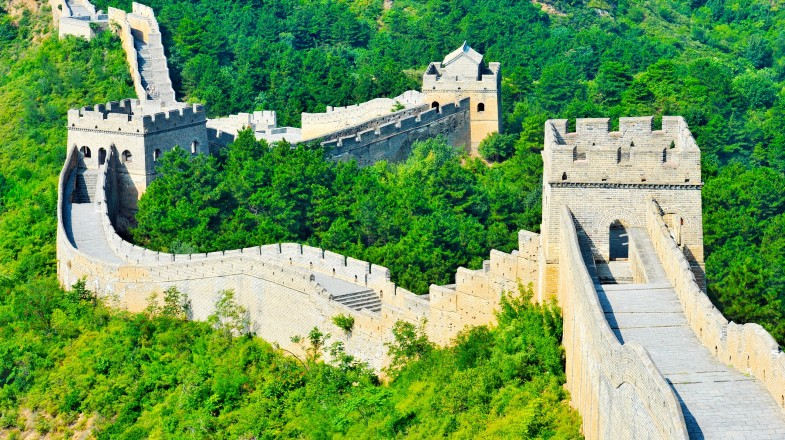
The origins of the Great Wall date back to the 7th century BCE, during the Warring States period, when various Chinese states built defensive walls to protect themselves from invasions by nomadic tribes from the north. These early walls were made from tamped earth, wood, and stones, and were relatively short segments designed for localized defense.
When Emperor Qin Shi Huang unified China in 221 BCE, he ordered the connection and expansion of these walls to create a more extensive barrier against the Xiongnu, a confederation of nomadic tribes. This marked the beginning of what is often regarded as the first Great Wall, stretching roughly 5,000 kilometers.
Subsequent dynasties, including the Han (206 BCE–220 CE), Sui (581–618), and most notably the Ming dynasty (1368–1644), contributed to the construction and reinforcement of the wall. The Ming dynasty, in response to persistent threats from the Mongols and other northern tribes, built the most well-preserved and iconic sections of the wall using bricks and stones. These sections include watchtowers, beacon towers, barracks, and troop barracks.
Architecture and Construction
The Great Wall’s construction is a marvel of engineering, adapting to the diverse terrains it traverses—from rugged mountains and steep cliffs to rolling deserts.
- Materials: Early walls were made of rammed earth and wood. The Ming dynasty sections employed bricks, stones, lime mortar, and tiles, enabling greater durability.
- Design: The wall averages between 6 to 7 meters (20-23 feet) in height and 4 to 5 meters (13-16 feet) in width at the top, wide enough to allow soldiers and horses to march along the battlements.
- Watchtowers: Placed at regular intervals, these towers were used for surveillance, signaling, and as living quarters for soldiers.
- Beacon Towers: Used to send smoke or fire signals to alert troops of enemy movement.
- Fortresses: Larger military bases were built at strategic locations along the wall, enabling organized defense and troop deployment.
The construction process was extraordinarily labor-intensive, involving hundreds of thousands of workers, including soldiers, peasants, and prisoners. Many workers died due to harsh conditions, earning the Great Wall the somber nickname “the longest cemetery on Earth.”